@ CL
Zoltán Joó · personal site

Give me something that doesn't
add up yet.

Twenty-plus years in food — mostly commercial roles: account manager, country manager, key account manager — and somehow I always end up thinking in systems anyway. The same pull shows up in my MSc in supply chain, particularly in a thesis on changeover optimization across a multi-echelon system. These days it plays out in running the McDonald's relationship across continental Europe. My curiosity, though, tends to start exactly where everyone else's stops.

workcommercial · food & QSR · systems thinking
thinkinggrowth · technology · value
based inHungary · working internationally
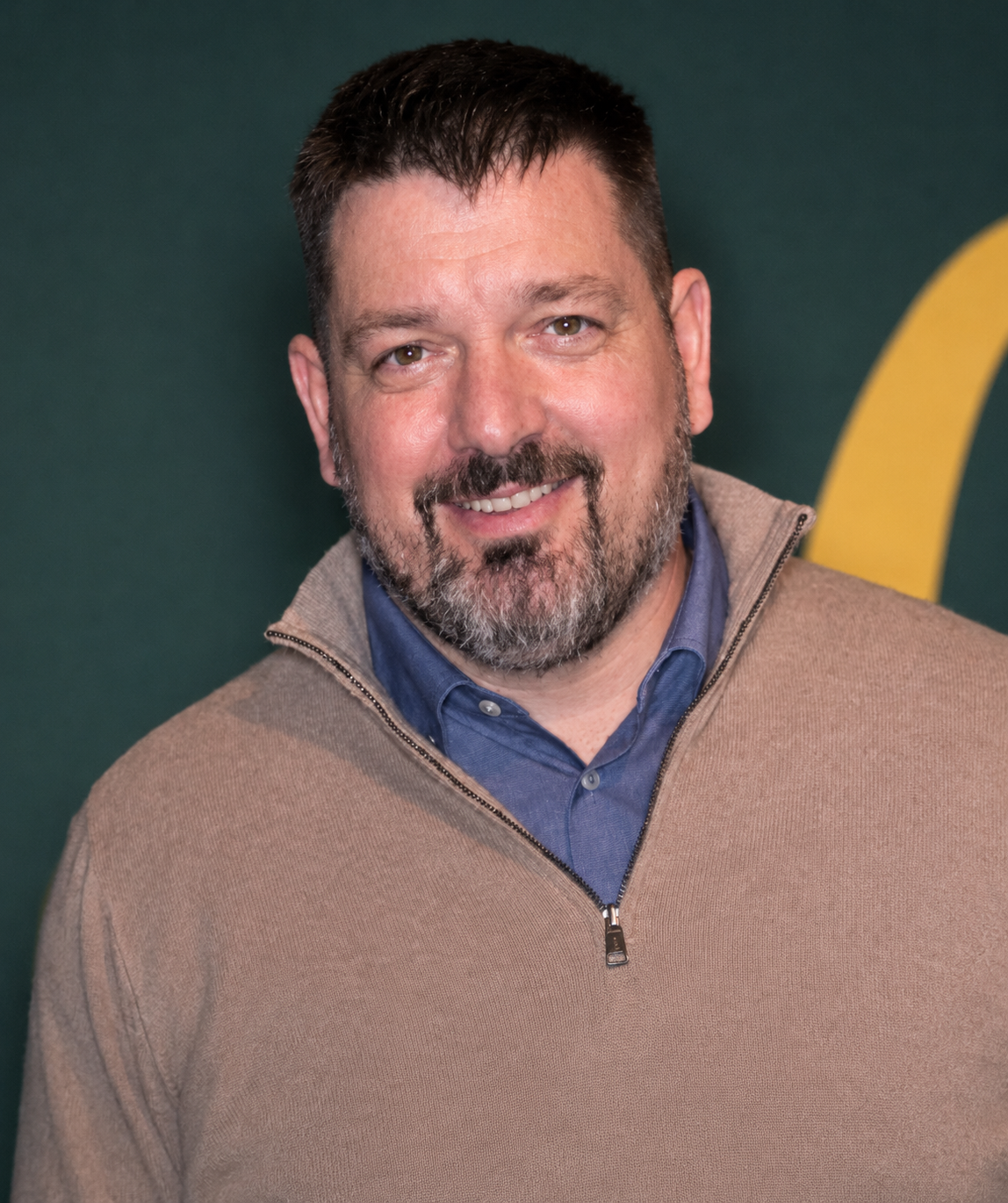
Portrait of Zoltán Joó
01 · work

Where good intentions collide.

My day job is commercial — building and running relationships with major accounts. But every account eventually turns into a systems question anyway: make-to-order versus make-to-stock, system-level demand versus reacting to individual signals, how long you fine-tune a project before you just launch it, how much cash ends up locked in inventory. Trade-offs, always trade-offs.

That overlap is where most of my career has played out. I currently run the McDonald's partnership across continental Europe as account manager — commercial on paper, but really a role that lives in the relationship itself. Before that, I was an account and country manager working with distributors and domestic accounts, and earlier still, inside a distributor, mostly on business development. Different seats, same question every time: where does cash quietly get stuck, and why does every function see it differently? In my own labor of love, Clario Lumini, I go looking for the answers.

food & QSR international key accounts systems thinking value creation decision support
02 · how I think

What I keep circling back to.

01

What am I actually getting better at?

Twenty years into a career, and skill doesn't just keep improving on its own — it plateaus the moment you stop pushing it. Early on especially, I struggled a bit with rooms where the loudest person gets credit for skills they don't actually have. Freediving doesn't work that way. There's no talking your way to a longer breath-hold, no bluffing past forty seconds. You just go back into the water and do it again.

02

Does this remove friction, or just add noise?

Every wave of technology gets sold the same way — more free time. What actually happens is the world simply expects more output, faster, with whatever time you supposedly gained. Measuring time precisely might have been the first invention that quietly took away human freedom; technology has mostly just added speed to that same process. If we're not careful, we end up serving the tools that were built to serve us. Sleep is the one place that's stayed stubbornly, entirely human — technology hasn't found a way in yet.

03

How much value never makes it to the surface?

Most commercial conversations still default to price, as if that's the whole story. Reliable quality, a supplier's spare capacity, a partner's engineering know-how — plenty of real value just sits there unrecognized, because nobody bothered to surface it. Cost avoidance is the easy half of value creation. The interesting half is finding the value nobody was counting — the kind that turns a cost conversation into an innovation one.

03 · occasional notes

Whatever got written down.

Every notebook has a page that isn't quite an idea yet, and isn't quite nothing either. This is where those pages end up — mostly business and systems, sometimes the QSR and food-industry world I know best, always whatever question wouldn't leave me alone that week. No schedule, no promise of a next one. Just what refused to stay unwritten.

note

Ecosystem intelligence

Companies rarely talk about it, but the partners inside the same supply chain often see completely different pictures — different granularity, different planning cycles, different assumptions about what "in stock" even means. Those small mismatches quietly hide real fluctuations, until they collide. Most of the cost isn't sitting in any single company's numbers. It's in the gap between them — and in how rarely anyone actually sits down to compare notes.

note

The cost of contingency.

Spare capacity looks like waste, right up until the week it isn't. I've watched companies quietly strip out every bit of slack in the name of efficiency, then panic. Optionality has a cost. So does not having any.

note

A grid where geometry and arithmetic meet.

Write 1 to 7 in a row. Each time a cube comes up — 8, 27, 64 — it starts a new row, directly beneath its cube root. Then look at which column a number lands in. That is the sequence I submitted to the OEIS, A400938. What I like is how little it takes: a grid and a rule, and geometry and arithmetic turn out to be describing the same thing. A quiet reminder that two views of the same problem often fit together better than expected.

oeis.org/A400938 →
04 · books in the backpack

Books in the backpack for business trips.

Long flights, quiet hotel evenings. These are the ones that keep coming along.

05 · selected projects

Things I am building around the edges.

inventory-capital diagnostics

Clario Lumini®

You know how much cash sits in your inventory. Do you know where, and whether it's justified? Clario Lumini is how I go looking: every product in every distribution centre read through three lenses — where capital is held beyond what's needed, what isn't moving as expected, and how much gross profit that capital actually earns. What comes out is a written Passport, calm and bounded by the data — it never claims more than the data allows. Cash-centric clarity from fragmented business views.

clariolumini.com →
personal exploration

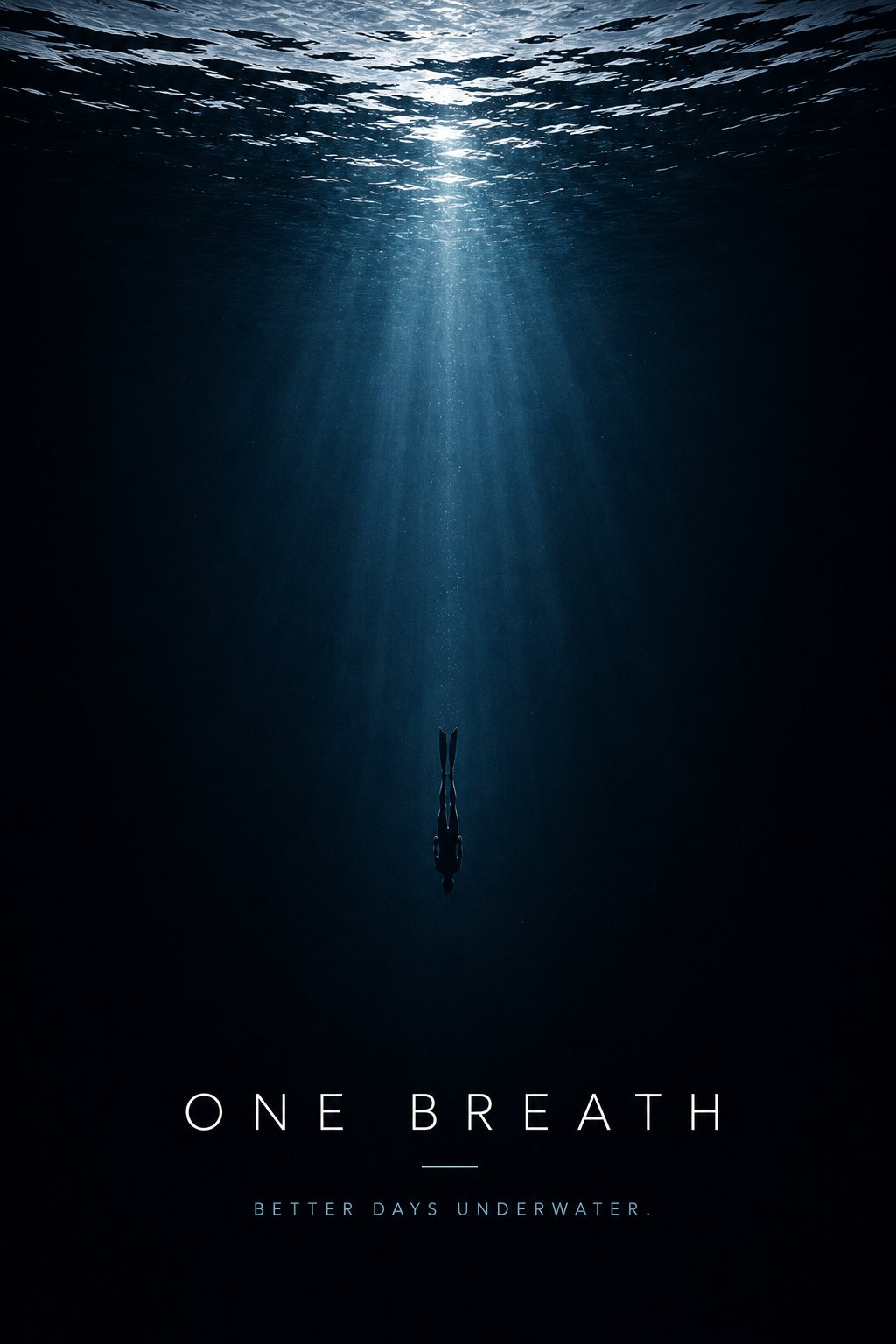
One Breath

Not a project so much as a hobby ecosystem — everything that goes with feeling at home in and around the water: freediving, travel, dive spots, gear actually worth owning, the kind of know-how you only get from being in the water yourself. The whole thing runs on one line: better days underwater.

A lone freediver descending into deep blue water lit by a shaft of sunlight from the surface, with the words One Breath — Better Days Underwater.
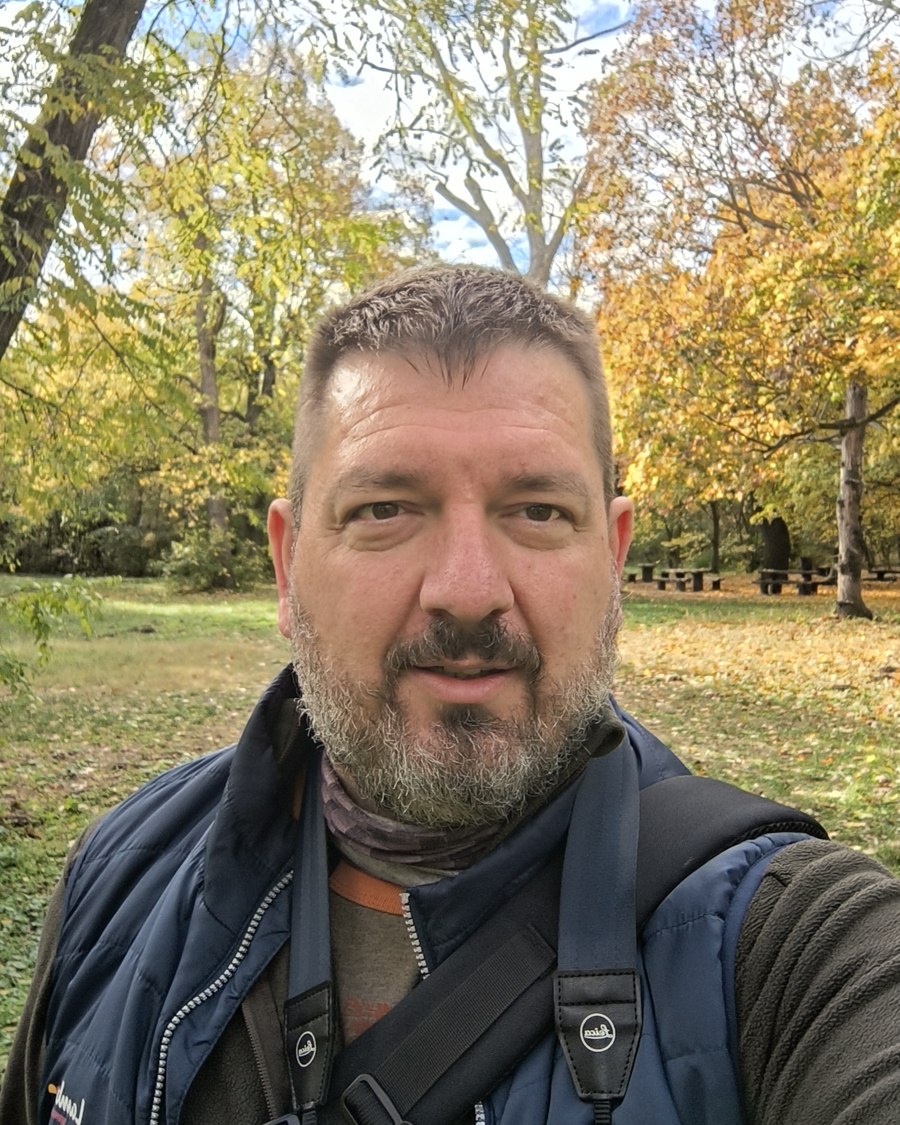
Zoltán Joó outdoors in a park in autumn
06 · beyond the title

There is more than the professional bio.

Most of what actually fills my weekends has nothing to do with any of this. Three kids get first claim on my time, and we spend as much of it outdoors as we can.

What's left tends to disappear into music — years spent collecting and tweaking analog synths that shaped a specific corner of electronic music back in my twenties, and just as long building a vinyl shelf heavy on 2000s drum & bass, breakbeat and techno, still played the old way: turntables into a simple, honest 2-channel mixer, no laptop in sight. Freediving is the one thing on this list I actually do alone, which might be exactly why it stuck. Numbers get their share too: playing with them on the edge of a napkin once ended up as an approved sequence in the On-Line Encyclopedia of Integer Sequences — A400938, Nov 2026, under my name. Last on the list, a solar setup on the roof is still refusing to charge the way the datasheet promised... still working on that one.

07 · contact

If any of this connects, say hello.

A project, an idea, a disagreement with something I wrote — or just curiosity. All good reasons to write.